
Rooftop solar
Arrays on nave, aisle or hall roofs, placed for the least visual impact and mounted to suit slate, tile or lead.
Sympathetic installations for parish churches, chapels, church halls and diocesan buildings, including listed and conservation-area sites. We guide you through faculty and planning, keep the design discreet and help with the funding open to church communities.
This page is for parochial church councils, churchwardens, treasurers, clergy and diocesan property teams. Many churches have committed to carbon targets, and most pay more than they would like to heat and light large, old buildings. Solar can help with both, as long as it is designed with the building, its setting and the consent process in mind.
Church roofs are often large and south-facing, church halls are used through the day, and many parishes own their building for the very long term. The main things to get right are consent (a faculty, listed-building consent or planning permission), sympathetic placement so the array is unobtrusive, and access arrangements that respect services, weddings and funerals.
We survey the roof and structure first, give you honest advice on what is realistic, design for the least visible placement and plan the work around services and church events. Afterwards, our monitoring and maintenance mean no volunteer has to become the solar expert.
Arrays on nave, aisle or hall roofs, placed for the least visual impact and mounted to suit slate, tile or lead.
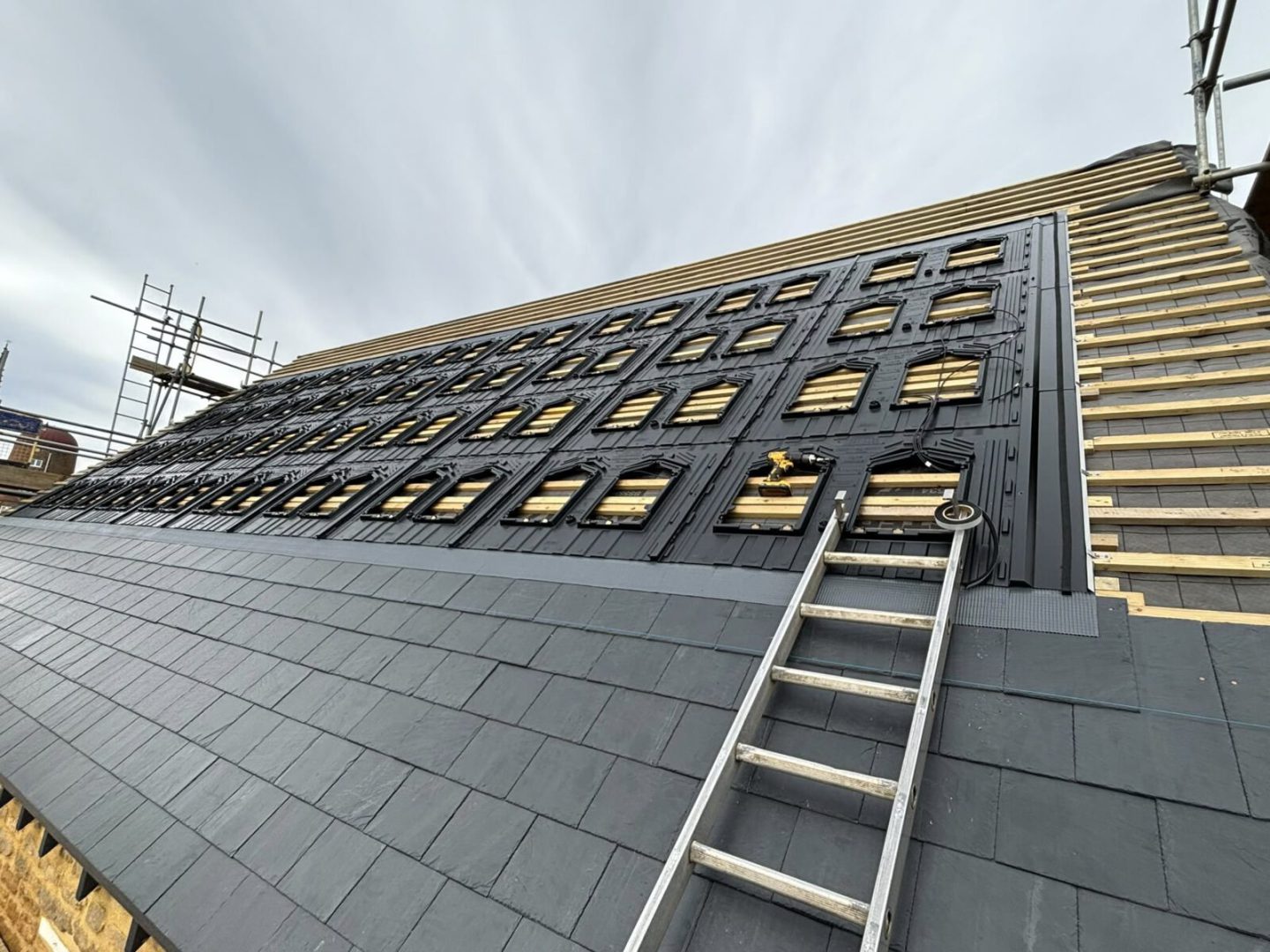
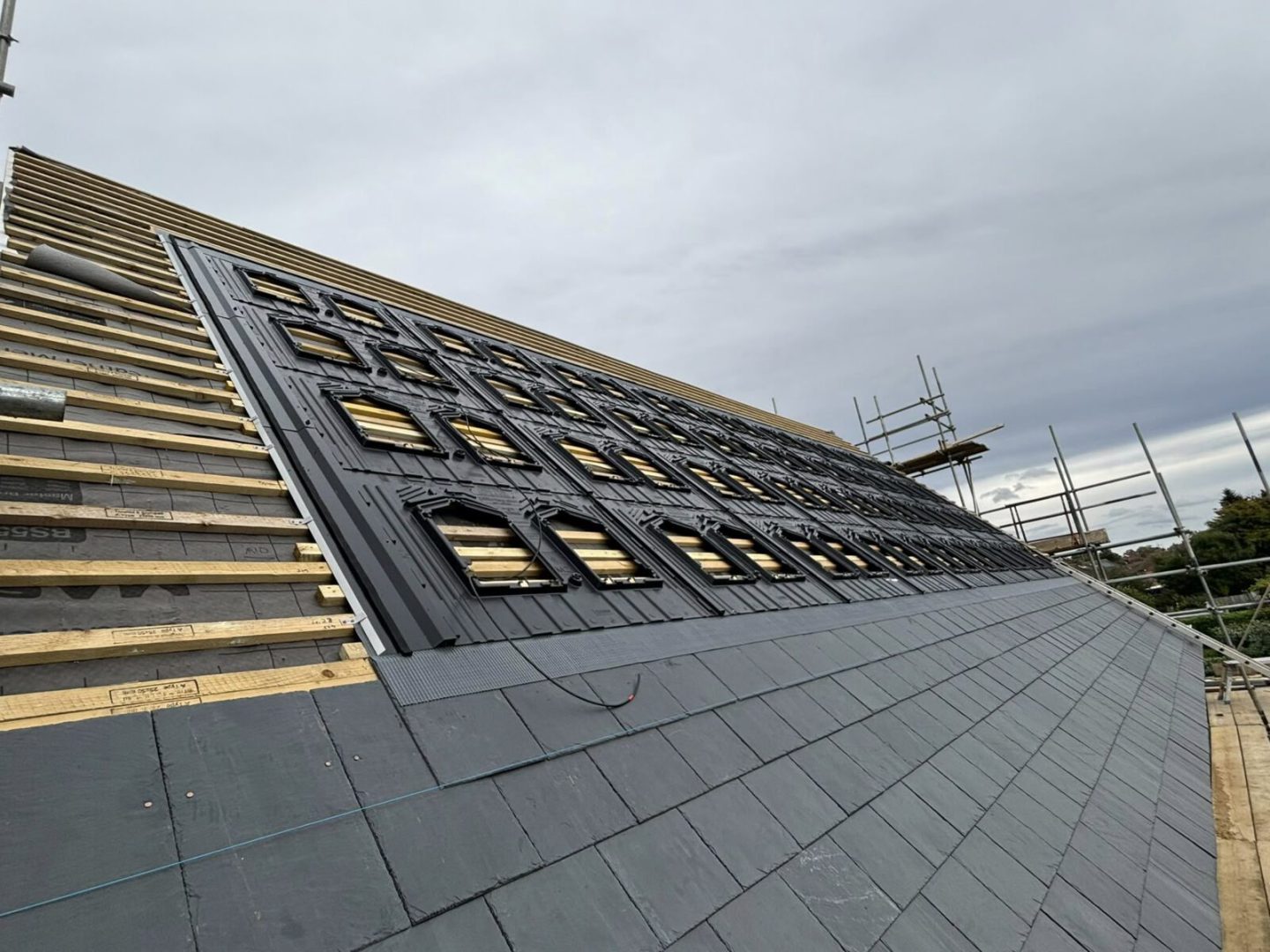
Where a roof is being re-covered, in-roof panels sit flush with the covering for a tidier, lower-profile result.
Store daytime generation for evening services, concerts and hall bookings.
Where the roof cannot be used, a discreet ground-mounted array in the grounds may be possible, subject to consent.
Our in-house roofing crew can repair or re-cover the roof and make it solar-ready under one contract.
Explore roofingHelp with grant programmes, denominational Net Zero schemes and the evidence for congregation fundraising.
Visit the Funding HubStructural surveys, sympathetic placement and consent guidance for listed and conservation-area churches.
Faculty and planning supportWe plan the work around services and church events, and leave a clean, safe site every day.
Respectful workingA detailed proposal setting out the design, costs and programme, ready to share with everyone involved in approving the project.
Fixed-price quotationMonitoring, planned maintenance and fault response so the system is never a burden on volunteers.
Operations & maintenanceSend us a recent electricity bill and details of the building. We work out system size, savings, carbon reduction and indicative return.
No obligationOur engineer surveys the roof, structure and setting, and gives clear advice on faculty, listed-building or planning consent.
Own engineersA fixed-price proposal for the PCC with the evidence a grant or fundraising campaign needs.
Committee readyWe support you through consent, then our MCS-certified team installs at times planned around services and church events.
Around servicesA simple handover for volunteers, plus monitoring and a maintenance plan.
Long-term supportShare a recent electricity bill and a few details about the building. A UK engineer will model the system and give you the figures your PCC and funders need.
In most Church of England churches, yes, and listed buildings may need further consent. We advise at survey stage and support the application with drawings and specifications. Other denominations have their own processes, and we can help you through them.
We design for the least visible slope wherever the sun allows, and in-roof or low-profile mounting where it helps. We show you visualisations before anything is submitted.
That is what the structural survey establishes before any design is finalised. If the roof needs work first, our roofing crew can do it under the same contract.
If the building is used in the evenings for services, concerts or bookings, a battery stores daytime generation for that use. Your feasibility study shows whether it pays.
Grant programmes and denominational Net Zero schemes change from year to year, so we do not promise specific grants. Our Funding Hub explains the routes, and your feasibility study provides the application figures.
Yes, for eligible systems. Surplus generation is exported to the grid, and with an MCS-certified installation you can apply for Smart Export Guarantee payments from an SEG licensee. Rates vary by supplier, so your feasibility study sets out the export assumptions.
We do. Monitoring, planned maintenance and fault response mean churchwardens and volunteers are not left to manage the system themselves.
A free feasibility study from our UK engineering team, with the figures your church council and funders need.