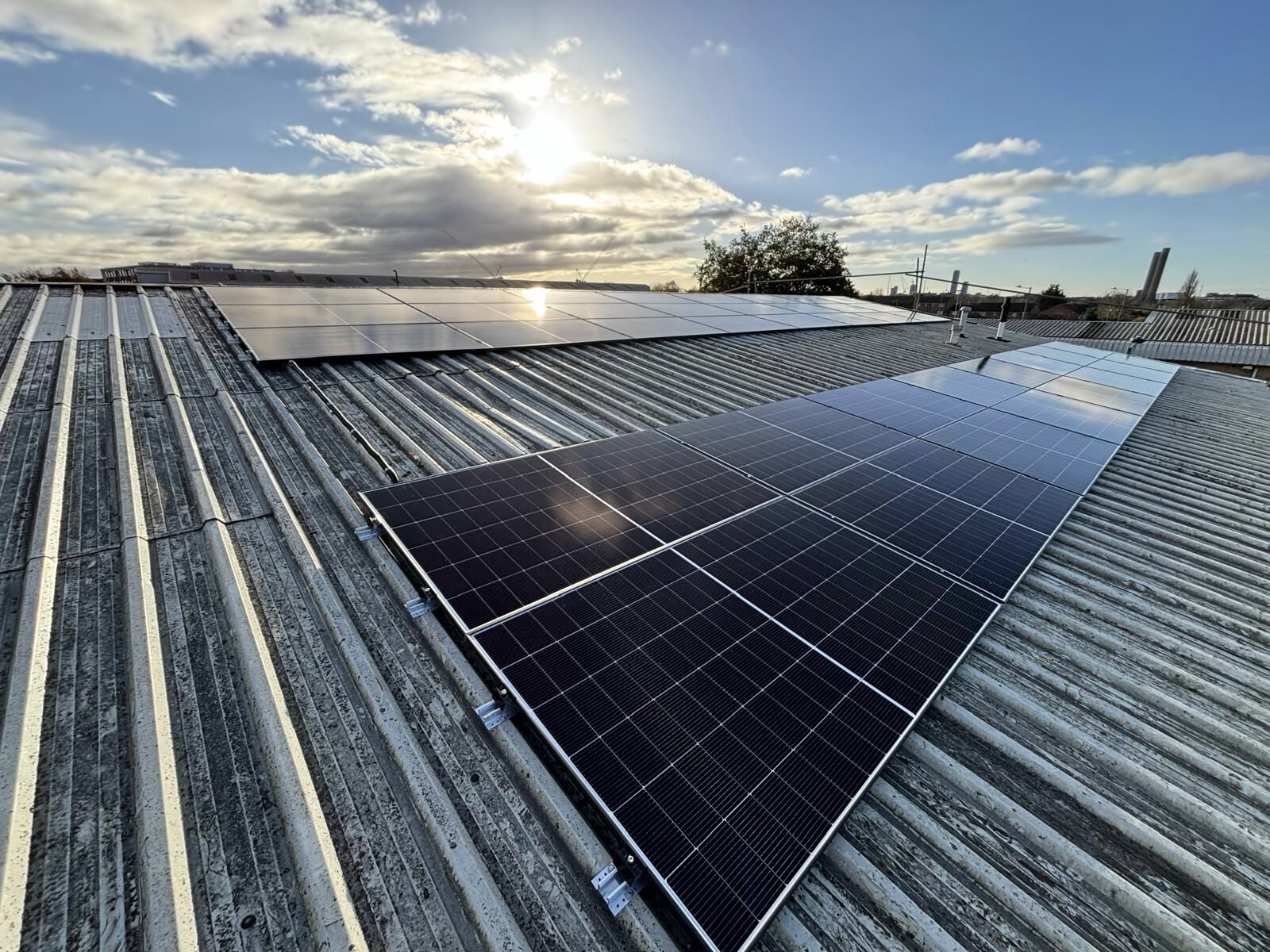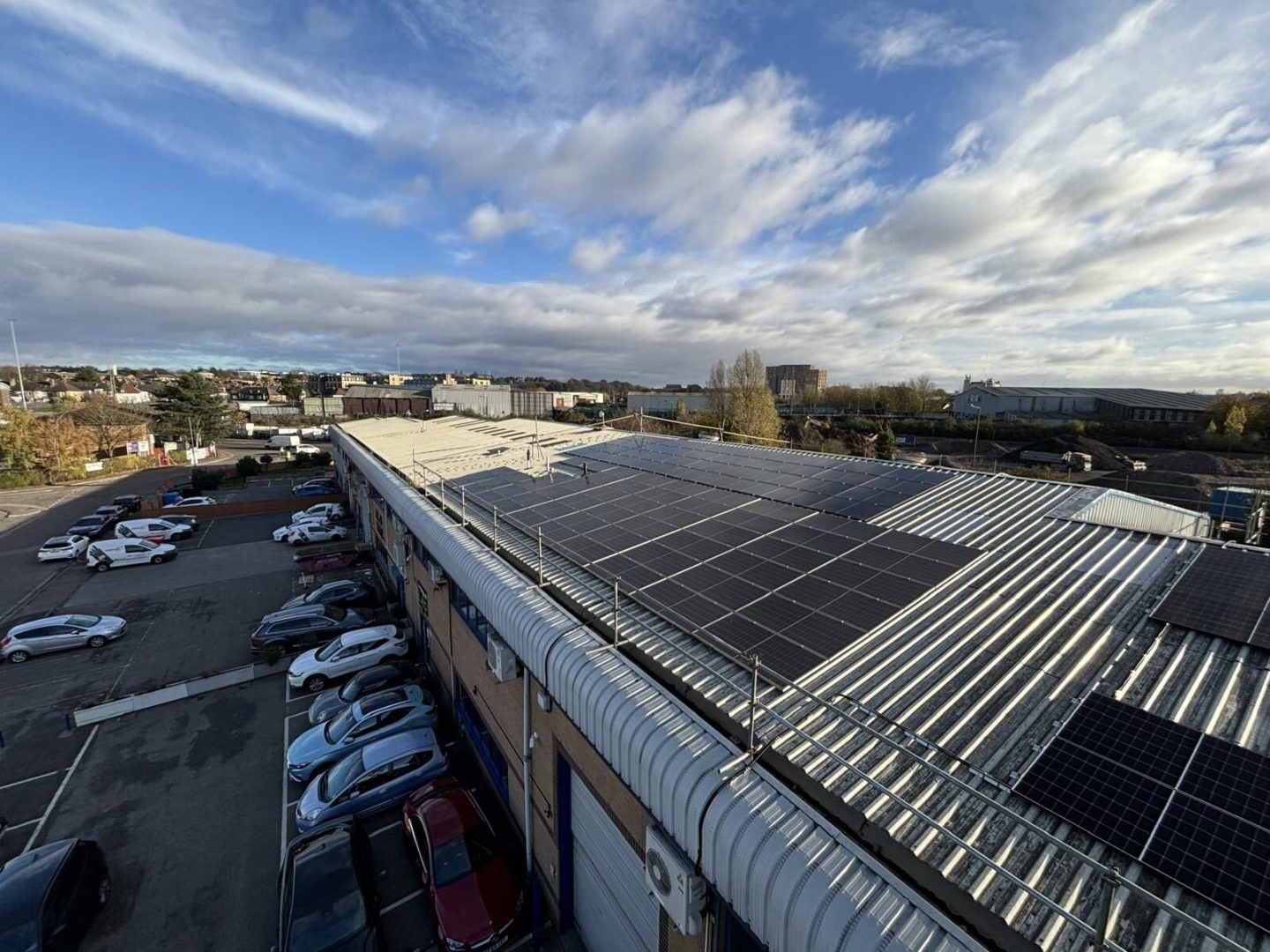

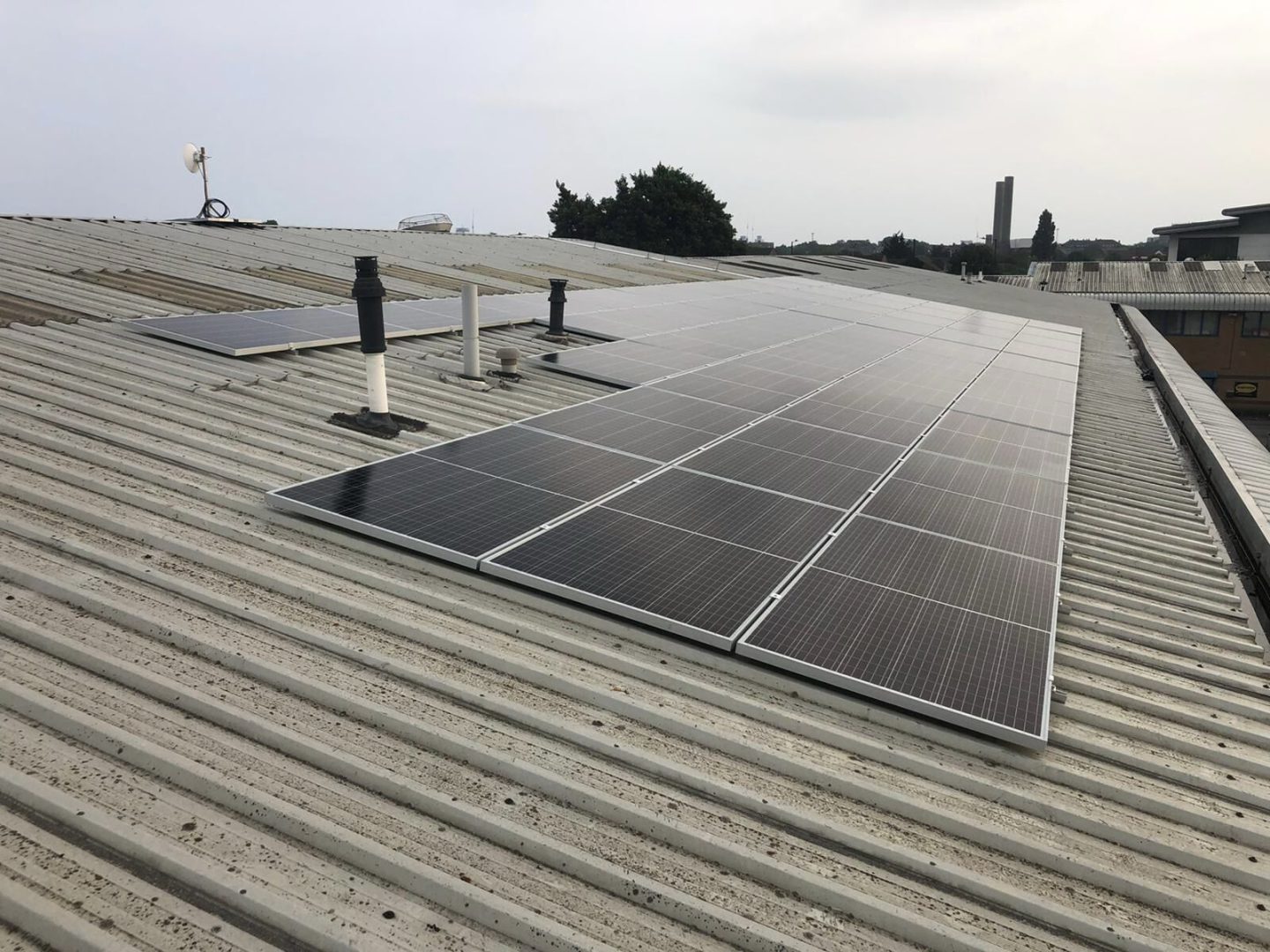
Pitched & metal roofs
Standing seam, trapezoidal and pitched factory roofs, with clamp or rail systems that protect the roof warranty and the structure beneath.
Rooftop and ground-mount PV for factories and manufacturing sites, sized to your daytime load, with battery storage designed around the loads that must stay on and installation programmed around production. One accountable UK contractor engineers, installs and maintains it all.
Written for manufacturers, plant managers, finance directors and energy managers with a factory roof and daytime electricity demand from production. Factory solar pays back by replacing electricity you would otherwise buy at your import rate, so the best systems are sized to the load underneath them. The more of the generation you use on site, the stronger the business case.
We start with your half-hourly or billed consumption data and the roof itself: structure, covering, orientation, shading and access. From that, we design an array with the right inverter strategy, apply to the DNO under G99 where required and produce a business case with capex, lease and PPA routes for your finance team to sign off. Add a commercial battery and it can shave peaks, shift consumption and keep critical loads such as process lines running through an interruption.
Installation is RAMS-led and sequenced around production, with our own engineers and roofing crew on site, drawing on experience across manufacturing sites. After commissioning, monitoring and a maintenance plan keep the asset performing and give you the generation and carbon data your ESG reporting needs.
Standing seam, trapezoidal and pitched factory roofs, with clamp or rail systems that protect the roof warranty and the structure beneath.
Ballasted or fixed systems on flat membranes, designed with wind loading and structural capacity in mind.
Framed arrays on spare land beside the site, for when the roof is unsuitable or your demand outstrips what the roof can supply.
Peak shaving, tariff optimisation, resilience for process lines and flexibility income, integrated with the array.
Explore battery storageDischarge during your most expensive hours to reduce the peaks that drive capacity and time-of-use charges.
Explore peak shavingWorkplace, fleet and depot EV charging, with load management to stay within the site supply.
Explore EV infrastructureIn-house structural and electrical design, DNO applications and commissioning, with one accountable team throughout.
MCS · NICEIC · Constructionline · CHASRAMS-led installs programmed around production, tenants and access.
Delivered around live operationsA business case with capex, operating lease and third-party PPA options, so the project fits your finance policy.
On or off balance sheetMonitoring, planned maintenance, cleaning, fault response and insurance repairs for the life of the asset.
Operations & maintenanceWe turn your site details and electricity bills into an estimated system size, savings forecast, carbon reduction estimate and indicative ROI.
No obligationStructural, roof and electrical surveys, critical loads, DNO G99 application and an array design matched to your load profile.
In-house engineersCapex, lease and PPA routes with the data your finance and ESG teams need to sign off.
Business caseRAMS-led programme sequenced around production and access, delivered by our own crews.
Around productionTesting, MCS documentation, monitoring set-up and a maintenance plan.
Asset managementShare your site details and electricity bills. A UK engineer will size the array to your load and give you the business-case figures.
Our installations are RAMS-led and sequenced around your operating hours, tenants and site access. We have delivered our industrial rooftop projects around live operations.
We can design the system to back up selected critical loads. Tell us what must stay on and we'll design around it.
Most commercial systems are above the G98 limits, so a G99 application must be approved by your Distribution Network Operator before connection. Where network capacity is constrained, an export limitation scheme (G100) can help. We prepare and manage the application and any export limits it sets.
Yes. Alongside outright purchase we can structure operating lease and third-party PPA routes, so the installation can sit on or off the balance sheet.
Monitoring gives you generation, consumption and carbon-reduction data, backed by MCS documentation, for ESG and board reporting.
It can. Peak shaving discharges the battery during your highest-demand periods, reducing the peaks behind capacity and time-of-use charges. The saving depends on your peaks and tariff, which we model from your half-hourly data.
Every kWh you generate and use on site is a kWh you do not buy at your import rate, and any surplus can be exported. Payback depends on your daytime demand, roof, tariff and finance route, so your feasibility study models a savings forecast and indicative ROI from your own consumption data rather than a generic figure.
Commercial installations are subject to VAT at 20%, which VAT-registered businesses can normally reclaim. Your accountant should confirm how it applies to your organisation.
Our operations and maintenance team provides monitoring, planned maintenance, mechanical panel cleaning, fault response and insurance repair works for the life of the asset.
A free feasibility study from our UK engineering team: system size, savings forecast, carbon reduction estimate and indicative ROI for your site.